
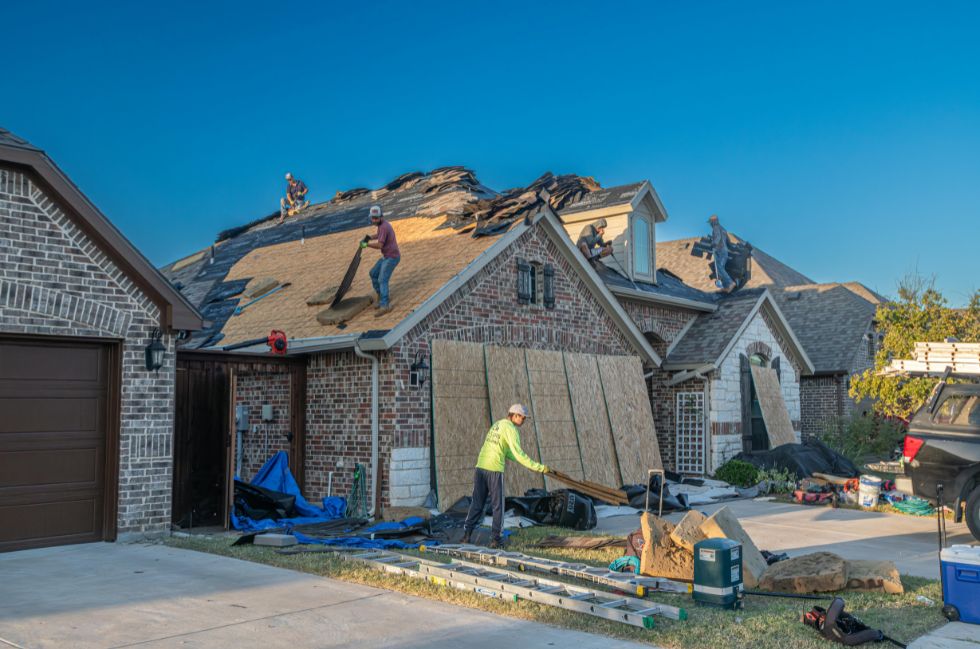
Dealing with a severe storm can be extremely stressful, especially if you are concerned about the roof over your head.
Whether it’s high winds peeling back shingles or hail leaving those dreaded dents, detecting storm damage early is the best way to save your wallet from a costly headache later.
If you suspect your home has been hit, don’t wait for a leak to appear in your living room.
Begin by conducting a quick perimeter check from the ground, looking for missing granules in the gutters and debris on the lawn. Because severe weather causes billions of dollars in losses each year, it is critical to act quickly.
Your best option is to contact Resort Exteriors.
Your trusted storm damage contractors who can provide a professional inspection and help navigate those confusing insurance claims.
4 Types of Roof Storm Damage
Storms really take a toll on your home’s defenses. From missing shingles to hidden leaks, catching issues early is key to saving money.
Feeling overwhelmed?
Reaching out to a reliable storm damage roofing company can simplify the repair process and ensure your roof is restored to its original condition.
1. Wind Damage
How to Identify Wind Damage
Wind damage is one of the most common forms of roof storm damage, particularly during hurricanes, tornadoes, and severe thunderstorms.
Strong winds can lift, tear, or completely remove roofing materials, making your home vulnerable to water damage.
Visual signs of wind damage include:
- Missing shingles: High winds (50+mph) can lift and remove entire shingles from your roof, exposing the underlayment or roof deck to the elements.
- Curling or peeling shingles: Partially raised shingles might curl back or peel away from the roof surface, disrupting the weatherproof seal.
- Lifted shingle edges: Even attached shingles may have lifted edges that can catch future winds and enable water penetration.
- Loose or broken flashing: Strong winds can bend, lift, or tear the metal flashing around chimneys, vents, and roof edges.
- Granule accumulation: Wind-damaged shingles frequently lose protective granules that gather in gutters or on the ground.
- Debris on the roof: Branches, leaves, and other material spread across your roof may indicate that wind damage has occurred.
What to Do Next
Conduct a Safe Inspection
Begin with a visual inspection from the ground, using binoculars.
Check for obvious signs such as missing shingles, exposed underlayment, and debris. Only use a ladder if it is safe, and never walk on a damaged roof.
Document the Damage
Take clear pictures and videos from various angles.
Show close-ups of damaged areas, wide shots of the entire area of damage, any debris that caused additional impact, and date-stamped images for insurance purposes.
Temporary Protection
If you can safely access the damaged areas, use roofing cement or nails to secure loose shingles.
Cover more exposed areas with weighted tarps. Keep all receipts for materials and labor for insurance reimbursement purposes.
Contact Professionals
Please contact your insurance company within 24-48 hours to report the damage.
Then, hire a licensed roofing contractor who has experience with storm damage to provide a professional assessment and written estimate.
2. Hail Damage
How to Identify Hail Damage
Hail can be tricky.
Even if your roof isn’t leaking yet, those hits weaken your shingles and significantly reduce their lifespan. Whether the stones were large or small and frequent, it’s worth looking at.
As a trusted storm damage roofing company, we can spot the hidden issues before they become pricey.
Signs of hail-damaged roofs include:
- Dented or bruised shingles: Look for random patterns of circular or oval-shaped dents where hailstones struck the roof surface.
- Granule loss: Hail can knock protecting granules off shingles, resulting in black areas or exposing the underlying asphalt. Inspect gutters and downspouts for excessive granule accumulation.
- Cracked or fractured shingles: Severe hail impact can cause shingles to crack or fracture, which may not be immediately noticeable but will leak over time.
- Shingle bruising: Soft areas on shingles that are spongy when pressed suggest underlying damage from hail impact.
- Damaged roof accessories: Roof accessories that have been damaged include dents or cracks in vents, chimney caps, metal flashing, and satellite dishes.
- Gutter and downspout damage: Dents in gutters, downspouts, and gutter guards are frequently easier to see than roof damage and indicate hail intensity.
What to Do Next
Time-Sensitive Inspection
Set up a professional roof inspection within 30-60 days of a hailstorm.
Some hail damage becomes apparent with time, but waiting too long can complicate insurance claims.
Most insurers allow you 1-2 years to file, but prompt action is preferable.
Check Gutters for Evidence
Check gutters and downspouts for excessive granule accumulation, which is a clear indication of hail damage.
Take photos of granules and any dents in gutters to document.
Document Everything
Professional documentation is necessary for hail damage claims.
Have your storm damage contractors photograph each instance of hail damage, along with reference measurements.
Close-ups show granule loss and denting, as well as damage to multiple roof planes and accessories.
All images include date and location metadata.
File Insurance Claim
To file a claim, please contact your insurance company.
Request an adjuster’s inspection. Have your roofing contractor present during the adjuster’s inspection to ensure that all damage is documented.
Many contractors provide free inspections and will work directly with your insurance.
Professional Repair or Replacement
Depending on the extent of the damage, your insurance company may approve isolated section repair or complete roof replacement.
Most insurance policies cover extensive hail damage (affecting more than 30% of roof surfaces) with full replacement.
3. Water Damage
How to Identify Water Damage
When a storm hits, heavy rain or ice dams can quickly turn a small leak into a structural nightmare.
Don’t wait for the ceiling to sag!
Hiring Resort Exteriors is key! As trusted storm damage contractors, we can spot those hidden vulnerabilities and protect your home.
Signs of water damage include:
- Active leaks: Water dropping or running into your property during or after rain, particularly around chimneys, vents, or roof valleys.
- Water stains: Brown, yellow, or dark stains on ceilings or walls, frequently with rings indicating repeated water incursion.
- Mold and mildew: Black, green, or white mold spots on ceilings, walls, or in attics suggest long-term moisture exposure.
- Sagging roof deck: Visible sagging between rafters suggests water-saturated roof decking, which could be structurally damaged.
- Peeling interior paint: Bubbling or peeling paint on ceilings and walls near rooflines indicates moisture problems.
- Musty odors: Damp, musty scents in higher levels or attic areas suggest latent water damage.
- Higher energy costs: Wet insulation decreases efficiency, making HVAC systems work harder.
What to Do Next
Locate the Water Source
Determine where water is entering your home.
Common entry points include clogged or damaged gutters, failed flashing around penetrations, and damaged shingles.
Moreover, it could be compromised roof valleys where two planes meet.
Address Active Leaks Immediately
Put buckets under active leaks to protect the floors and furniture.
Move valuables and electronics out of wet areas. Use towels and fans to dry the affected areas.
If water is pooling on the roof, it could indicate a drainage issue that requires immediate professional attention.
Prevent Mold Growth
Mold can start growing within 24 to 48 hours of water intrusion.
Use fans and dehumidifiers to quickly dry the affected areas. Remove any wet insulation, carpeting, or other porous materials that cannot be dried.
If mold growth has already begun, consider hiring a professional.
Professional Inspection and Repair
Have a licensed roofer inspect both exterior roof damage and interior water damage to your attic, insulation, and living spaces.
The inspection should identify the water entry point and assess structural damage to the roof deck and rafters.
Also, check for compromised insulation and evaluate interior damage requiring repair.
Insurance Claim
Water damage from storms is typically covered by insurance.
Document all damage with photos and videos. Keep damaged items for adjuster inspection. Save receipts for emergency repairs and temporary housing if needed.
Work with our storm damage contractor to ensure the insurance company covers both exterior roof repairs and interior restoration.
4. Impact Damage
How to Identify Impact Damage
When a storm sends a tree crashing onto your house, it’s more than just a mess.
It’s a structural emergency. Impact damage can crack rafters and let rain pour in instantly.
If your home takes a hit, call a storm damage roofing company immediately to secure the site and prevent further destruction.
Signs of impact damage include:
- Visible debris: Tree branches, limbs, or entire trees sitting on your roof.
- Punctured roof: Holes in roofing materials that reveal the interior structure or living rooms.
- Broken or shattered shingles: Crushed or cracked shingles in specific regions with visible impact sites.
- Structural deformation: Sagging, dipping, or apparent changes in the roofline that indicate structural damage to trusses or rafters.
- Damaged or collapsed chimneys: Impact might damage the stonework and generate extra risks.
- Interior exposure: In severe circumstances, you could see daylight through your ceiling or have debris enter your home.
What to Do Next
Ensure Safety First
If a tree or large branch has fallen on your roof, leave immediately if you hear cracking noises, see sagging ceilings, smell gas, or notice any electrical hazards. Never attempt to remove large debris on your own. If there is an immediate danger, call Resort Exteriors.
Secure the Property
Once safety is confirmed, take precautions to avoid further damage.
Cover exposed areas with tarps that are securely weighted down. Move valuables away from the damaged areas. Turn off utilities in affected areas if it is safe to do so.
Take photos before covering damage for insurance documentation.
Contact Emergency Services
For large trees or structural damage, you’ll need professional help.
Emergency tree removal services for safe debris removal and structural engineers for assessment of structural integrity (may be required by insurance).
But most importantly, you need licensed storm damage roofing contractors for emergency repairs and a comprehensive assessment.
Document Extensively
Impact damage claims require extensive documentation.
Click the pictures of debris on your roof from various angles. Any holes or structural damage, interior damage from multiple rooms, and adjacent property damage.
Moreover, take pictures of the tree or debris source that show it came from storm damage.
File Insurance Claim Immediately
Contact your insurance company immediately.
Impact damage is almost always covered by homeowners’ insurance as a sudden and unavoidable risk.
Your claim should include costs for debris removal, emergency repairs to prevent further damage, structural repairs, roof repair or replacement, and interior restoration.
Professional Repair
All repairs should be carried out by licensed professionals.
Before starting repairs, a structural engineer may need to assess the damage.
Your storm damage contractor should offer a comprehensive scope of services, including structural repairs, roof deck replacement, new roofing materials, and interior repairs.
Wrapping Up
Storms are unpredictable, but your recovery process shouldn’t be.
Whether you’re dealing with subtle hail scratches or major impact damage, acting fast is the secret to protecting your home’s value.
Navigating repairs and insurance can feel like a tornado, but you don’t have to do it alone.
Our team of expert storm damage contractors is here to take the stress off your shoulders with professional inspections and reliable repairs.
When you need a storm damage roofing company that truly understands how to restore your peace of mind, look no further than Resort Exteriors.
Frequently Asked Questions
1. How do I know if I have roof damage after a storm if there are no leaks?
Not all damage is immediately visible from within your home. Wind can lift shingles and break their seals, whereas hail leaves bruises that weaken the asphalt layer. These issues eventually lead to leaks and rot. It is best to hire a storm damage roofing company to conduct a professional inspection to detect these hidden issues before they become costly repairs.
2. How long do I have to file an insurance claim for storm damage?
While most insurance policies give you one to two years to file a claim, you must act as soon as possible. Documentation is easier to verify right after an event. Waiting too long can result in denied claims if the insurer claims the damage was caused by negligence rather than a single storm event.
3. Will my insurance premiums go up if I file a claim for roof damage?
In general, insurance companies cannot raise your individual rates due to acts of nature, such as hail or windstorms. However, if a huge storm hits a large number of properties in your area, premiums may rise. Working with professional storm damage contractors ensures that your claim is filed correctly, maximizing your coverage without additional complications.
4. Should I repair or replace my roof after a storm?
This depends on the severity of the damage. If less than 25-30% of the roof is damaged, a repair may be sufficient. However, if the structural integrity is compromised or the shingles have received extensive hail damage, a full replacement is usually the safer, more cost-effective long-term solution. Resort Exteriors can give you a thorough evaluation to help you make the best decision for your home.